RV Park Marketing: 12 Proven Ways to Get More Bookings in 2027
Quick answer
The RV park marketing ideas that bring in the most bookings are: a complete Google Business Profile, listings on RV directories like Good Sam and Campendium, a website with clear rates, site specs and online booking, Google Ads for searches like “RV park near [city]”, real photos and video, a steady flow of reviews, and emails that bring past guests back. Market overnight travelers and long-term guests separately, because they search differently.
Demand for RV travel is still strong. According to KOA’s 2027 Outdoor Hospitality Report, more than 52 million North American households camped in 2025, 47% of campers prefer RVs, and 31% plan to spend more nights camping in 2027. But most of those travelers choose their next stop on a phone, in minutes, based on what they see on Google and in RV apps.
I have handled marketing for Country Home Estates, a long-term RV park in Oklahoma, since 2023, covering Google Ads, Meta ads, local SEO, the website and email newsletters. This guide shares the 12 RV park marketing strategies that consistently bring in bookings, grouped by what each one does.
In this guide
For RV park owners
Want this done for your park?
I have marketed a long-term RV park in Oklahoma since 2023: Google Maps, Google Ads, Facebook ads, the website and resident newsletters. See how I can help with RV park marketing.
First, know your two types of guests
Most RV parks serve two very different groups. Mixing them into one message is one of the most common RV park marketing mistakes.
| Overnight and short-stay travelers | Monthly and long-term guests | |
|---|---|---|
| Who they are | Road-trippers, retirees, families, snowbirds passing through | Traveling workers, contractors, people between homes, full-time RVers |
| What they search | “RV park near me”, “RV parks near [attraction]” | “Monthly RV lots [city]”, “long-term RV parks near [city]” |
| What convinces them | Photos, reviews, location, easy online booking | Monthly price, utilities, Wi-Fi, rules, quiet and safety |
| Best channels | Google Business Profile, RV apps, Google Ads, Meta video ads | Google Ads, a monthly-rates page, local employers, referrals |
12 RV park marketing ideas that fill sites
Part 1 · Get found on Google
1. Turn your Google Business Profile into a booking machine
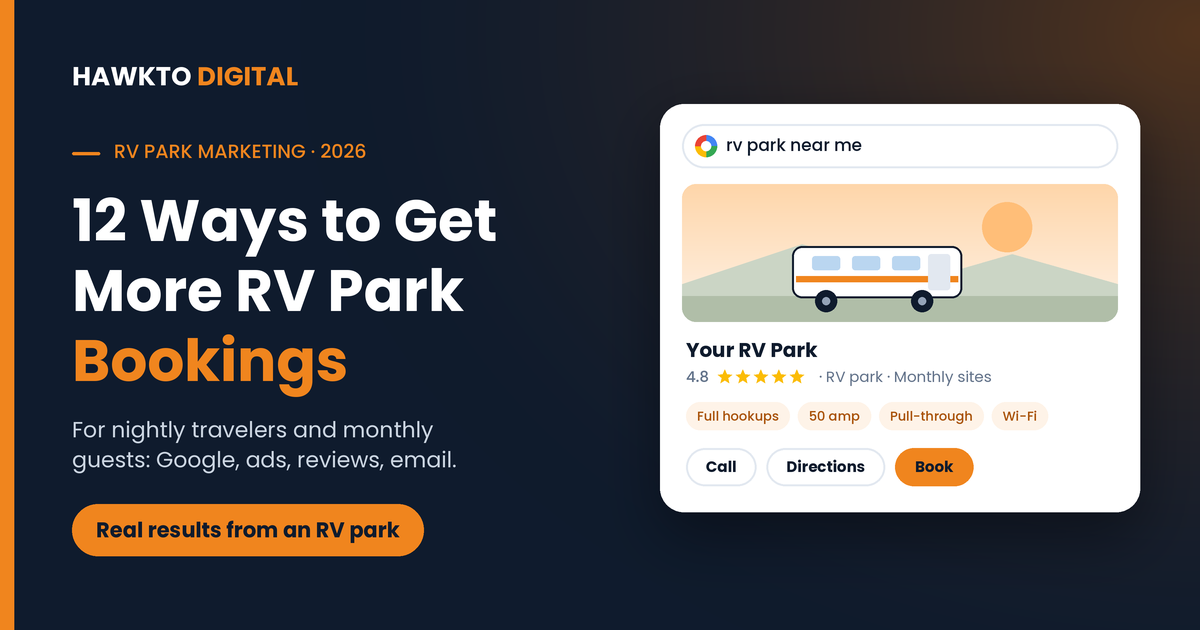
Travelers search “RV park near me” or “RV parks near [city]” from the road, and Google shows a map with three parks before any website. Your Google Business Profile is often the first and only thing they look at before they call.
- Choose RV park as your primary category, and add Campground only if you also take tents or cabins.
- List what RVers filter on in your services and description: full hookups, 30 and 50 amp, pull-through sites, maximum rig length, Wi-Fi, laundry, pet friendly.
- Upload real photos of actual sites with a rig parked on them, the hookups, the bathhouse, laundry and entrance. RVers want to see whether their rig will fit.
- Keep check-in hours and office hours accurate, and answer your phone. Many RV bookings still happen by phone.
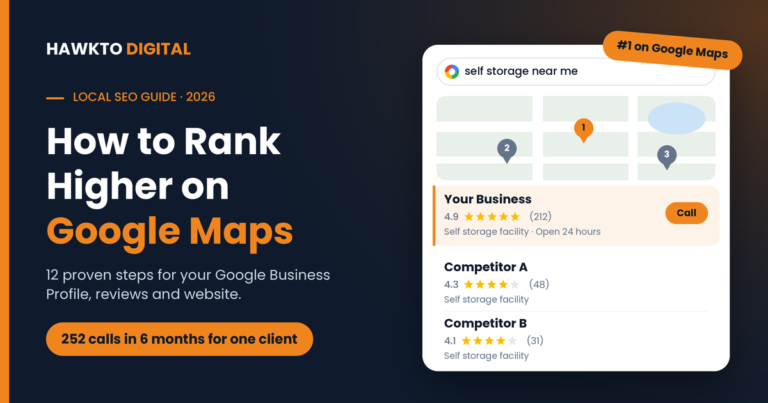
Google ranks local results on relevance, distance and prominence. My guide on how to rank higher on Google Maps walks through the full process.
2. Get listed on the RV directories and apps travelers use
Many RVers plan routes with dedicated apps and review sites. Claim and complete your listing on the ones that matter in RV travel, such as Good Sam, RV LIFE Campground Reviews, Campendium and Hipcamp, plus Apple Business Connect, Bing Places, Yelp and Facebook.
Use the same park name, address and phone number everywhere, add the same specs (amp service, site length, pull-throughs) and the same real photos. Consistent listings build trust with travelers and with Google.
3. Build a website that answers every RVer question
Before booking, RVers want answers to the same questions every time. Your website should answer them without a phone call:
- Nightly, weekly and monthly rates on one clear page.
- A site map, plus site specs: pull-through or back-in, amp service, maximum rig length, surface type.
- Amenities, park rules, pet policy and check-in times.
- Directions from the nearest highway, and nearby attractions, events and employers.
- Real reviews and a gallery of real photos.
Give long-term guests their own page for monthly sites, because they search differently from overnight travelers. If your current site is outdated or hard to use on a phone, that is exactly the kind of site I rebuild through website development for local businesses.
4. Let guests book online, any time
RVers often plan their next stop at night, at a rest area or from the passenger seat. If the only way to book is calling during office hours, you lose those guests to a park that lets them reserve in two minutes. Connect a reservation system such as Campspot, Firefly or Newbook to your website and make the “Book now” button visible on every page.
Part 2 · Paid ads that fill sites
5. Run Google Ads on high-intent searches
Google Ads put your park at the top of the page for people searching right now. For RV parks, the best searches usually look like “RV park near [city]”, “RV parks near [attraction]”, “RV parks on [highway]” and, for long-term guests, “monthly RV lots [city]”.
- Use separate campaigns for overnight travelers and monthly guests, with different ads and landing pages.
- Add call and location assets so people can tap to call or get directions straight from the ad.
- Track calls, direction requests and form submissions as conversions, so you know what each booking costs.
This is the setup I run for Google Ads clients, with conversion tracking through Google Tag Manager from day one.
6. Use Facebook and Instagram ads with real video
Meta ads work best for RV parks when they show the experience: a short walk-through video of a site at sunset, the pool, the view, the dog park. Reach travelers in your region and on routes to nearby attractions, and retarget people who visited your website but did not book.
One rule to know: if you advertise monthly or long-term sites as housing, Meta may require the Housing special ad category, which limits targeting by age, gender and ZIP code. Plan your audiences around that from the start. See how I run Meta ads for local businesses.
Want to know why your park is not getting more bookings?
I will review your Google Business Profile, website and listings against the top parks in your area in a free 30-minute call, and show you what to fix first.
Part 3 · Reviews and content that build trust
7. Ask every guest for a review
Reviews are part of how Google judges prominence, and RVers read them closely before choosing where to stay. Ask overnight guests at checkout or with a short text the next day, and ask long-term residents once they have settled in. Create your review link and QR code from inside your profile (Google shows how here) and put the QR code at the office and in the laundry room.
Reply to every review, thank guests by name and handle complaints calmly. Never offer discounts in exchange for reviews; Google prohibits it.
8. Show the park with real photos and video
Stock photos of a generic campground make travelers suspicious. Show your real sites, your real amenities and your real surroundings. A short drone video or a walk-through from the entrance to a site answers the question every RVer has: will my rig fit, and is this place well kept? Use the same footage on your website, Google Business Profile and social media.
9. Publish local guides travelers are already searching for
People planning a trip search for things like “things to do near [lake]” or “RV route through [region]”. A few helpful guides on your website, such as nearby attractions, restaurants, events, scenic drives and RV-friendly fuel stops, bring in trip planners months before they book. Every guide should link to your rates and booking page.
Part 4 · Turn guests into regulars
10. Email past guests and current residents
Your guest list is your cheapest source of bookings. A simple email program can welcome new guests, ask for reviews, announce events and seasonal offers, and invite past guests back. For Country Home Estates, I created a themed newsletter campaign built specifically to drive Google reviews from existing tenants.
If you want this handled for you, my newsletter service is a one-time $300 setup and then $50 per newsletter.
11. Partner with local employers and attractions
Long-term RV sites are popular with traveling workers and contractors on long jobs. Introduce your park to local employers, contractors and staffing agencies that bring in out-of-town workers. For overnight travelers, partner with nearby attractions, event venues, golf courses and wineries for cross-promotion and package offers.
12. Plan offers around your seasons
Every park has busy and slow months. Use the slow months to push weekly and monthly stays, host small events, or court groups like RV clubs and rallies. Run ads and email campaigns before the busy season starts, not after, so your best sites are booked early.
How to measure what is working
Good RV park marketing is measured in booked nights and filled monthly sites. Check these numbers every month:
| What to track | Where to find it |
|---|---|
| Calls, direction requests and website clicks | Your Google Business Profile Performance report |
| Online bookings and where they came from | Your reservation software |
| Cost per call, direction request and form from ads | Google Ads and Meta Ads Manager, with conversion tracking |
| Occupancy for nightly and monthly sites | Your reservation software |
| New reviews and average rating | Google and your RV directory listings |
Real results from an RV park
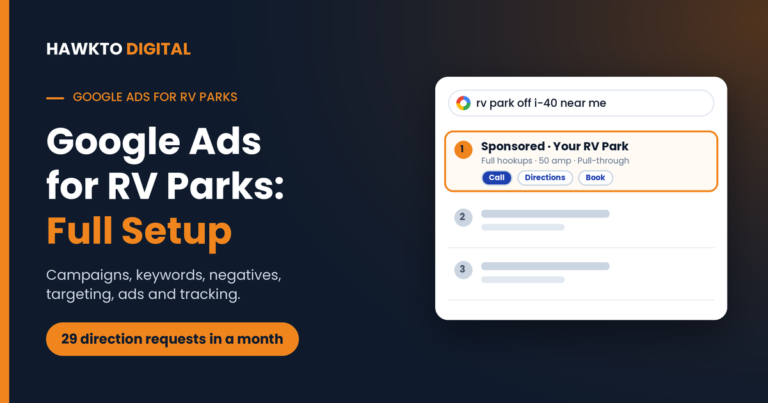
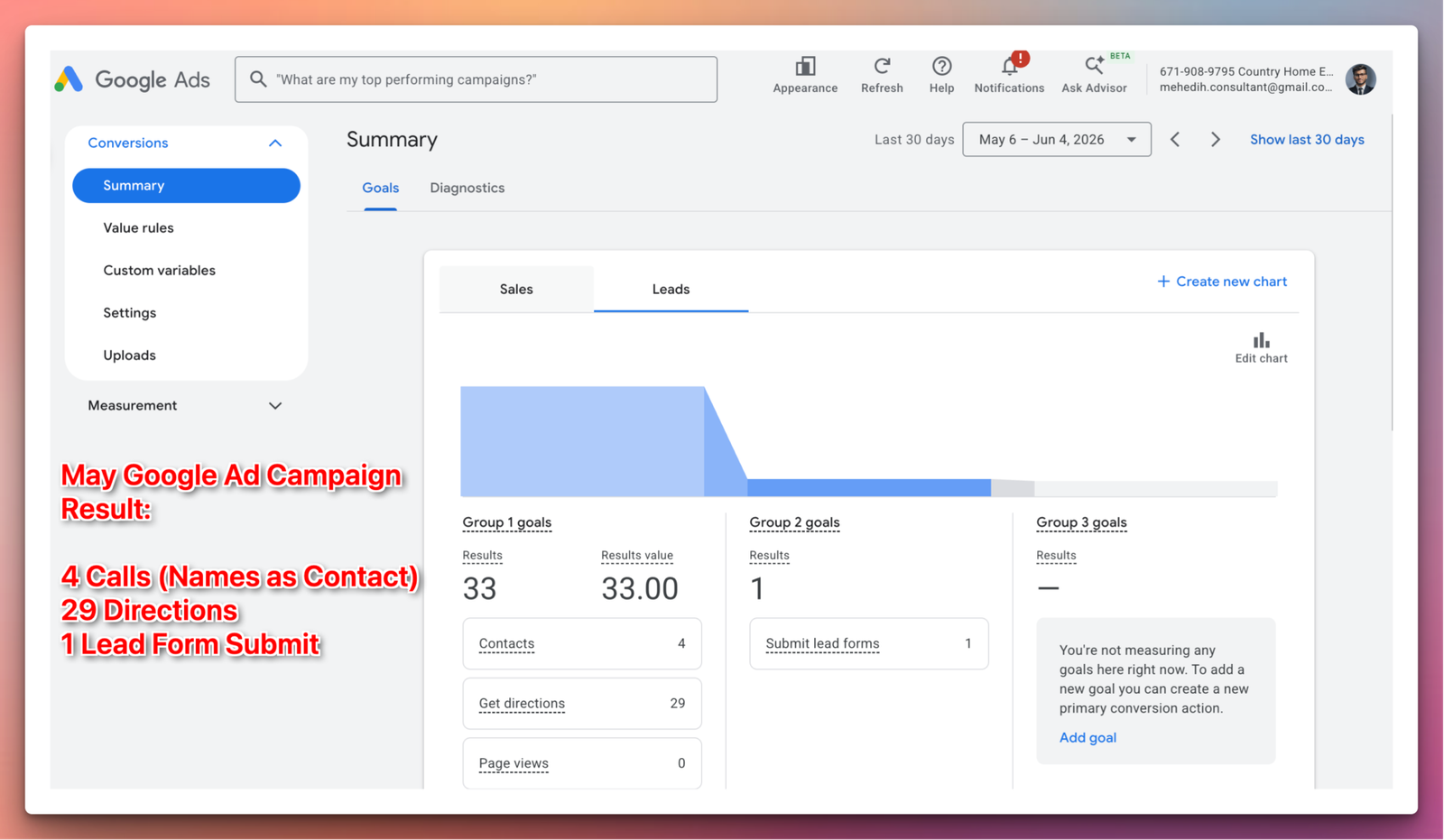
For Country Home Estates, a focused Google Ads campaign in May produced 29 direction requests, 4 phone calls and a lead form submission, all tracked through Google Tag Manager so every result can be tied back to the ads that drove it.
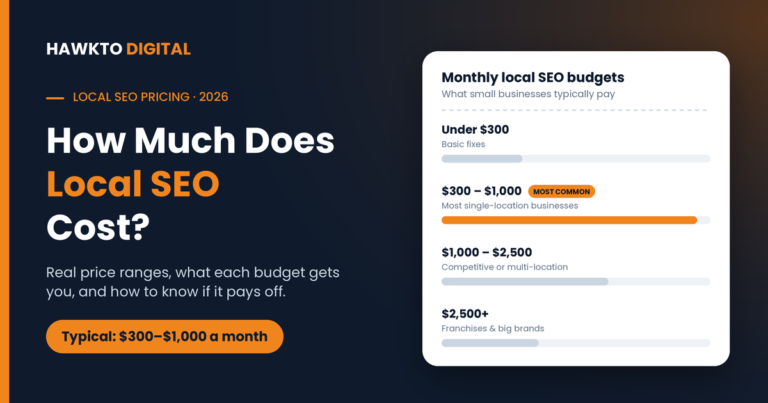
Want to see what this would cost for your park? My prices are on the pricing page, and I have broken down what local SEO costs in 2027. If you also run a storage facility, my guide to self storage marketing covers that side.
RV park marketing FAQ
Frequently asked questions
Answers to what RV park owners and managers ask most about getting more bookings.
QHow do I market my RV park?
Start with a complete Google Business Profile, listings on the RV directories travelers use, and a website with clear rates, site specs and online booking. Then add Google Ads for high-intent searches, ask every guest for a review, and email past guests to bring them back.
QHow do I get more long-term tenants for my RV park?
Create a dedicated page for monthly sites with clear monthly rates, utilities, rules and photos. Run separate Google Ads for searches like “monthly RV lots near me”, and introduce your park to local employers and contractors who bring in traveling workers.
QWhat is the best advertising for an RV park?
For most parks, Google Ads on searches like “RV park near [city]” bring the fastest bookings because those people are already looking. Facebook and Instagram ads with real video work well for building demand and retargeting website visitors.
QHow much should an RV park spend on marketing?
Work backwards from what a guest is worth. A monthly site renting for $600 to a guest who stays six months is worth $3,600. If marketing brings in even one extra long-term guest every month or two, it usually pays for itself. My local SEO plans start at $300 a month and Google Ads management at $300 a month plus ad spend.
QDoes my RV park need a website if I am on booking apps?
Yes. Directories and apps help travelers find you, but your own website is where you control the photos, rates and booking experience without paying commission. It also helps your Google Business Profile rank, because Google uses your website to understand your park.
Fill more sites, nightly and monthly
I already market an RV park in Oklahoma. Book a free 30-minute call and I will show you where your park is losing bookings to competitors, and what to fix first.

About the author
Mehedi Hasan is the founder of Hawkto Digital and is Google, HubSpot and Semrush certified. He markets RV parks and self-storage facilities in the US, covering Google Business Profiles, local SEO, Google Ads, Meta ads, websites and email. Read his story or see pricing.