
Marketing Plan for a New RV Park: A 90-Day Launch Plan
Quick answer
A new RV park has to be easy to find, easy to book and trusted before opening day. Start 90 days out, when a verified Google Business Profile with an opening date begins showing on Google. In days 1–30, set up booking software, your website, real photos, your Google profile, tracking and an email list. In days 31–60, list on RV directories, open reservations and reach employers, RV clubs and local partners. In days 61–90, launch Google and Facebook ads, make a grand-opening offer, get press and set up reviews. After opening, check your numbers every week and move money to what brings bookings.
An established RV park has things a new park doesn’t: reviews, Google rankings, past guests and a reputation. A new park opens with none of them, so how you launch decides how fast it fills.
Timing matters more than most owners expect. Google lets you add an opening date to your Business Profile up to a year ahead, and once it’s verified, the profile starts showing on Google 90 days before that date. Guests can’t review you until you open (Google). Peak dates also sell out early: in Insider Perks’ May 2026 index, sites that sold out did so a median of 131 days before check-in (Woodall’s Campground Magazine).
Plan for a climb, not a full park on day one. Feasibility firm MMCG Invest uses the example of a new park opening at 30 to 40% occupancy in its first year and reaching steady occupancy by year three or four (MMCG Invest). A good launch shortens that climb. This 90-day marketing plan for a new RV park covers what to do before you open and in the months after, step by step, with real costs and the numbers to watch.
In this guide
- The 90-day plan at a glance
- Before day 1: know who you’re opening for
- Days 1–30: Build the foundation
- Days 31–60: Get found and open bookings
- Days 61–90: Fill your opening weeks
- After opening: your first 90 days
- What a launch costs
- The numbers to watch every week
- 7 launch mistakes
- Frequently asked questions
- Sources
For RV park owners
Want this done for your park?
I have marketed a long-term RV park in Oklahoma since 2023: Google Maps, Google Ads, Facebook ads, the website and resident newsletters. See how I can help with RV park marketing.
The 90-day plan at a glance
Here’s the whole marketing plan on one page. Day 1 is 90 days before your opening date. If your park is already open, start at day 1 anyway and move faster.
| Phase | When | Goal | Main tasks |
|---|---|---|---|
| Before day 1 | 4 months or more before opening | Know your market | Market research, positioning, launch budget |
| Days 1–30 | 90 to 60 days before opening | Build the foundation | Booking system, website, photos, Google profile, tracking, email list |
| Days 31–60 | 60 to 30 days before opening | Get found and open bookings | Listings, reservations, employers, RV clubs, local partners, social |
| Days 61–90 | The last 30 days | Fill your opening weeks | Ads, a grand-opening offer, press, review setup, a soft opening |
| After opening | Your first 90 days open | Earn reviews and adjust | Review requests, weekly numbers, fixing what guests mention |
Before day 1: know who you’re opening for
Your marketing plan should come from your market, not from what other parks do. If you haven’t yet, follow my RV park market research guide to size up demand, competitors and prices. Then decide three things:
- Your guest mix. Overnight, weekend, monthly and seasonal guests find parks in different places, so the mix decides your channels.
- Your one-sentence position. Who the park is for and why it’s different, such as “Big-rig pull-throughs with 50-amp service, 5 minutes from the lake.” Use it on your website, Google profile and ads.
- Your launch budget. See what a launch costs below.
Here’s where each type of guest usually finds a park:
| Guest type | Where to reach them |
|---|---|
| Overnight travelers | Google Maps, Google Search ads, RV apps and directories, interstate logo signs |
| Weekend and vacation campers | Google, Facebook and Instagram, booking marketplaces, local tourism sites |
| Monthly guests and traveling workers | Local employers, Google searches like “monthly RV sites near me”, Facebook |
| Snowbirds and seasonal guests | RV directories, RV clubs, Facebook groups, email |
Also check that your park’s name is easy to spell and search, that the domain and social media names are free, and that your sign, website and listings will all use exactly the same name.
Days 1–30: Build the foundation
Everything in later phases sends people to these basics, so get them right first.
1. Choose booking software guests can use on their phone
Your booking system is a marketing tool, not just an office tool. In the RMS 2026 report, nearly 85% of campers said they’re more likely to book when they can choose their exact site (RMS). In Campspot’s 2025 data, 62% of reservations were made online, and 35% of bookings on its marketplace came through the mobile app (Campspot and OHI).
Pick software that shows an interactive site map, takes online payments, works well on a phone and handles nightly, weekly and monthly stays. Ask whether it connects to a booking marketplace. Parks on Campspot’s software, for example, can appear on the Campspot marketplace (Campspot FAQ).
2. Build a website that answers every RVer question
RVers check details before they book: will my rig fit, which hookups, are dogs allowed, how do I get in with a 40-foot trailer? Your site should answer all of it on the first visit:
- Rates for nightly, weekly and monthly stays, and your opening date.
- Site types with lengths, widths, 30- or 50-amp service, full hookups and pull-throughs.
- Rules on pets, quiet hours, RV age and check-in times.
- Big-rig directions, with your entrance on a map.
- Nearby attractions, employers and services.
- A “Book now” button on every page, and an “Opening soon” signup before bookings open.
My RV park website design guide covers the pages and features in detail.
3. Get real photos as soon as sites are ready
Photos sell sites, and a new park has none yet. Book a photographer, with a drone if possible, as soon as the first sites, entrance and bathhouse are finished. Shoot each site type, the bathhouse and laundry, the entrance and sign, and the views. Add photos as construction finishes rather than waiting for the last site.
If you use renderings before then, label them clearly as artist’s renderings. Guests who feel misled by photos write the harshest reviews, and a new park can’t afford them.
4. Set up your Google Business Profile with an opening date
This is why the plan runs 90 days. Google lets you add an opening date up to a year in advance, and once your profile is verified, it shows on Google 90 days before that date. In that window you can add posts, photos and a business description. Guests can’t leave reviews until you’re officially open, and after you open, your profile shows a “Recently opened” label for 90 days (Google Business Profile Help).
Choose “RV park” as your primary category, use your exact name as it appears on your sign, and add your phone, website and hours. Verification can take time, so start early. Then claim your listings on Apple Business Connect and Bing Places with exactly the same details. My Google Business Profile guide for RV parks covers categories, attributes and photos.
5. Set up tracking before you spend
You’ll make better decisions in month three if you can see where bookings came from in month one. Before you spend on ads:
- Install Google Analytics 4 and Google Search Console on your website.
- Add UTM tags to the website link on your Google profile and every directory listing.
- Add a required “How did you hear about us?” question to your booking form.
- Learn your booking software’s reports for bookings by source, night and site type.
6. Start an “opening soon” email list
Everyone who signs up before you open is a warm lead for your first weeks. Add a signup form to your website, link it from your Google profile posts and social media, and offer first access to opening dates. Tools are cheap at this size: MailerLite, for example, is free for up to 250 subscribers and 2,500 emails a month, with paid plans from $12 a month.
By day 30: Your booking system, website and Google profile are live, photos are coming in, tracking works and your email signup is collecting names.
Days 31–60: Get found and open bookings
Now make the park easy to find in the places RVers already look, and start taking bookings.
7. List your park on RV directories and booking sites
RVers compare parks on apps and directories before they book, so a new park needs to appear there before its opening date. Most are free to list:
- Campendium lists parks for free, with advertising options on request (Campendium).
- RoverPass is free for parks to list on, with paid premium listings (Modern Campground).
- Good Sam Parks is a paid program that lists your park on GoodSam.com and promotes it through Good Sam and Camping World channels (Good Sam Parks).
- RV LIFE, Hipcamp and the Campspot marketplace are worth checking too, depending on your booking software and guests.
Use exactly the same name, address and phone number everywhere. My RV park advertising guide compares these options with costs.
8. Open reservations, with a plan for delays
Take bookings for your opening season at least 60 days before you open, and earlier if you open near summer. Guests book a range of lead times: in Campspot’s 2025 data, more bookings came in the 7 to 59 days before arrival (Campspot and OHI), but peak dates sell out much earlier. In Insider Perks’ May 2026 index, sites that sold out did so a median of 131 days before check-in (Woodall’s Campground Magazine).
Construction delays happen. Write a clear policy for moving or refunding bookings if your opening date slips, and tell guests early. A delay handled well costs you a few bookings. A delay handled badly can leave your first reviews angry before anyone has stayed.
9. Reach monthly guests where they work
If your research showed demand from traveling workers, go to them. Call the HR or housing contact at nearby hospitals, plants, construction firms and energy projects. Send a one-page flyer with your monthly rate, what’s included, your opening date and a direct contact. Monthly guests who book before opening give you steady income while overnight bookings build. My guide to long-term RV park tenants covers this in detail.
10. Invite RV clubs and rally groups
One club booking can fill a row of sites. Reach out to local chapters of RV clubs and owner groups for specific RV brands, and offer a group rate for an early rally or meetup. Group guests also tend to post photos and talk about where they stayed.
11. Get on your town’s radar
Join your chamber of commerce and ask your state and county tourism offices to list your park on their websites. Introduce yourself to nearby attractions, restaurants and outfitters, and agree to recommend each other. If you’re near an interstate exit, ask your state DOT about its business logo sign program. Iowa, for example, charges $230 per sign a year and requires at least 20 camping spaces (Iowa DOT), and approvals can take time.
12. Share the build on social media
A new park has a story established parks don’t: watching it come together. Post construction progress, site reveals, the team and your opening date on Facebook and Instagram. Short phone videos work well. Every follower you gain now is someone who sees your opening announcement.
By day 60: You’re listed on the main RV directories, reservations are open, employers and clubs have your details, and your social media shows the park taking shape.
Opening a new RV park soon?
In a free 30-minute call, I’ll review your launch timeline, Google profile, website and booking setup, and tell you what to fix first so your park is ready to take bookings.
Days 61–90: Fill your opening weeks
The last 30 days are about turning attention into bookings and making sure your first guests have a great stay.
13. Launch Google Search ads
Search ads reach travelers at the moment they’re looking, which a new park can’t do through Google Maps yet. Target searches like “rv park near [town]”, “rv parks [town]” and “monthly rv sites [town]”. In LocaliQ’s 2026 benchmarks, travel clicks average $2.14 and the average cost per lead is $44.70 (LocaliQ). Start with a fixed daily budget, send clicks straight to your booking page and turn on location assets so your ad shows your address.
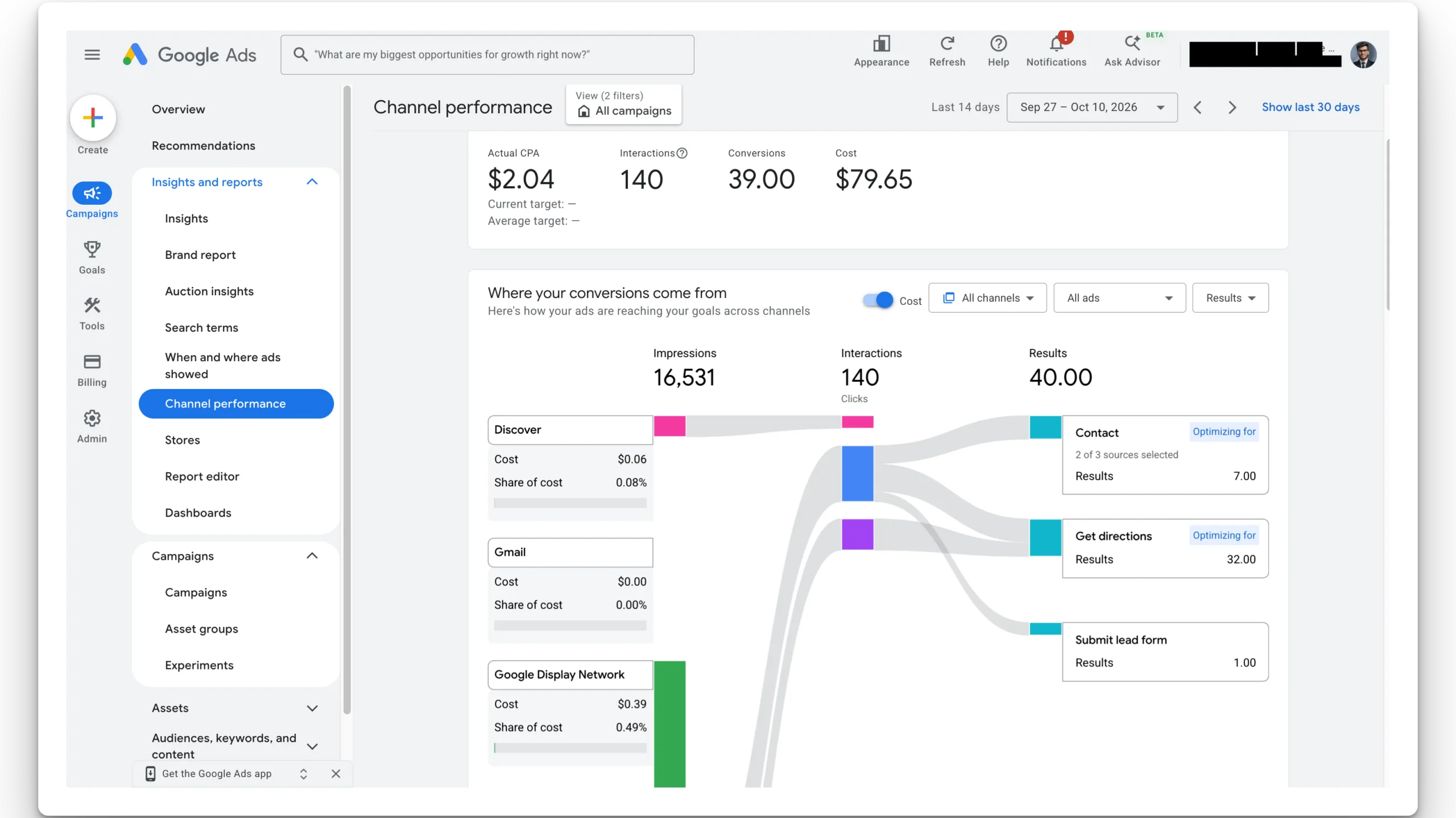
My guide to Google Ads for RV parks covers keywords, budgets and settings.
14. Run Facebook and Instagram ads for awareness and monthly guests
Facebook and Instagram reach people before they search, which helps a park nobody knows yet. Travel traffic campaigns averaged $0.42 per click in LocaliQ’s 2026 benchmarks (LocaliQ). Show real video of the park, target people within driving distance and along your main routes, and use a lead form for monthly inquiries. See my guide to Facebook ads for RV parks.
15. Make a grand-opening offer
Give people a reason to try a park with no reviews yet. Keep the offer simple and time-limited, such as a founding-guest rate for the first month, a free third night midweek or a move-in special for monthly guests. Send it to your email list first, then announce it everywhere. Never tie an offer to leaving a review.
16. Get press and hold a ribbon-cutting
A new RV park is local news. Send a short announcement to local newspapers, TV stations and radio with your opening date, the number of sites and what’s new for the area. Hold a ribbon-cutting with your chamber of commerce, and invite local businesses, employers and tourism contacts.
17. Set up reviews before your first guest arrives
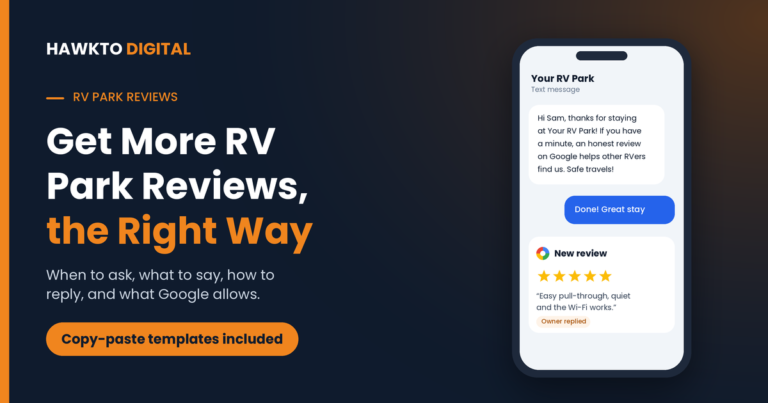
As soon as you open, every early review carries extra weight for a new park. Get your Google review link, put it on a QR code at checkout and in your post-stay message, and train staff to ask every guest. Follow Google’s rules from day one: don’t offer anything for a review, don’t ask only happy guests and don’t ask friends, family or staff, because Google treats family and employment ties as a conflict of interest (Google policy). My RV park reviews guide has a simple routine and templates.
18. Do a soft opening
Open to a small number of real guests a week or two before your big opening, perhaps at a lower rate. Watch every arrival. Test the signs, the gate, the Wi-Fi, the pedestals and the bathhouse, and fix what goes wrong before the grand opening brings more guests. My guest experience guide has an eight-step walkthrough you can use.
By day 90: Ads are running, your opening offer is out, local press knows about you, reviews are set up and your team has rehearsed arrivals with real guests.
After opening: your first 90 days
Opening day is the start of your marketing, not the end. For the next 90 days:
- Build reviews steadily. Ask every guest and reply to every review. 74% of consumers look for reviews from the last three months (BrightLocal 2026), so a steady flow matters more than a burst.
- Check your numbers every week, using the table below.
- Fix what guests mention. Early reviews show you what to fix before it becomes a pattern.
- Invite guests back. Send a thank-you after each stay and a rebooking offer before next season. My email and text marketing guide has the automations and templates.
- Review everything at week 12. Move budget from channels that cost too much per booking to the ones that work, and fill quiet nights with the ideas in my occupancy guide.
What a launch costs
Many of the most important steps are free. Here’s what the paid ones cost, from published prices checked in October 2026:
| Item | Cost | Source |
|---|---|---|
| Google Business Profile, Apple Business Connect, Bing Places | Free | Google, Apple, Microsoft |
| Campendium and RoverPass listings | Free to list, paid upgrades | Campendium, RoverPass |
| Good Sam Parks program | Paid program, quoted by Good Sam | Good Sam Parks |
| Email marketing | Free up to 250 subscribers, then from $12 a month | MailerLite |
| Google Search ads | Travel clicks average $2.14; cost per lead averages $44.70 | LocaliQ 2026 |
| Facebook and Instagram ads | Travel traffic clicks average $0.42 | LocaliQ 2026 |
| Interstate logo signs | From $230 per sign a year in Iowa; varies by state | Iowa DOT |
Booking software and website costs vary by provider and park size, so get quotes early. For ads, set a fixed test budget for the first 30 days, track cost per booking, and compare it with what a booking is worth to you before you spend more.
The numbers to watch every week
| Number | Where to find it | What it tells you |
|---|---|---|
| Bookings and nights by source | Booking software and your “How did you hear about us?” answers | Which channels are working |
| Website visits and booking conversions | Google Analytics 4 | Whether your site turns visitors into bookings |
| Calls, direction requests and website clicks | Google Business Profile performance | Whether Google Maps is sending guests |
| Cost per booking from ads | Google Ads and Meta Ads, matched with booking sources | Which ads to scale and which to stop |
| New reviews and average rating | Google Business Profile | How fast you’re building trust |
| Occupancy by weekend, weekday and monthly | Booking software | Where your gaps are |
Compare your numbers with your own business plan or feasibility forecast, not with parks that have been open for years.
7 launch mistakes
- Starting marketing on opening day. Your Google profile, listings and bookings should be live weeks before.
- Using renderings or stock photos as if they’re real. Disappointed guests write your first reviews.
- Taking bookings with no plan for delays. Have a clear policy for moving or refunding bookings.
- Asking friends, family or staff for reviews. It breaks Google’s rules.
- Spending the whole budget on one channel. Test, then scale what works.
- Different names, addresses or phone numbers across listings. It confuses guests and Google.
- No way to track where bookings come from. Set up tracking before you spend.
Keep reading
Related guides for park owners
Google profile
Google Business Profile for RV Parks
Categories, attributes and photos that win on Google Maps.
New RV park marketing FAQ
Frequently asked questions
Answers to what owners ask most when they launch a new park.
QWhat should a marketing plan for a new RV park include?
A launch timeline that starts 90 days before opening. Set up booking software with a site map, a website, real photos, a Google Business Profile with your opening date and tracking. Then list on RV directories, open reservations, reach employers and RV clubs, and launch Google and Facebook ads with a grand-opening offer. Ask every guest for a review from day one.
QWhen should I start marketing my RV park before it opens?
At least 90 days before opening, and earlier if you open near peak season. A verified Google Business Profile with an opening date shows on Google 90 days before that date, and peak dates often sell out months ahead.
QCan I create a Google Business Profile before my RV park opens?
Yes. You can add an opening date up to a year ahead. Once verified, your profile shows on Google 90 days before opening, and you can add posts, photos and a description. Guests can leave reviews only after you open.
QHow much should a new RV park spend on marketing?
There’s no single right number. Start with the free channels, then give Google Search ads and Facebook ads a fixed test budget for 30 days. Compare each channel’s cost per booking with what a booking is worth to you, and move money to what works.
QHow do I get the first reviews for a new RV park?
Ask every real guest from your first stay, in person at checkout and with your review link a day or two later. Don’t offer anything in return, don’t ask only happy guests, and don’t ask friends, family or staff. Google treats those as fake or conflicted reviews.
QHow long does it take a new RV park to fill up?
It depends on your market. As an example, feasibility firm MMCG Invest describes a new park opening at 30 to 40% occupancy in its first year and reaching steady occupancy by year three or four. A strong launch helps you climb faster.
QWhat’s the best advertising for a new RV park?
Google Search ads, because they reach travelers who are searching right now, while your Google Maps rankings build. Facebook and Instagram ads help with awareness and monthly guests, and free directory listings fill in the rest.
QCan you handle marketing for my new RV park’s launch?
Yes. I set up Google Business Profiles, websites, listings, Google and Facebook ads, and review and email routines for RV parks. See the RV park marketing page or the pricing page, or book a free call.
Sources
Sources
Checked in October 2026.
- Google Business Profile Help, Add an opening date
- Google Maps user-generated content policy
- RMS, 2026 State of the Outdoor Accommodation Report (via Hospitality Net)
- Campspot and OHI, The Data Dig: 2026 Occupancy Outlook
- Woodall’s Campground Magazine, Insider Perks OHPI May 2026
- MMCG Invest, RV Park Feasibility Study: U.S. Market Outlook 2025–2030
- PinMeTo, BrightLocal Local Consumer Review Survey 2026
- LocaliQ, Search Advertising Benchmarks 2026
- LocaliQ, Facebook Advertising Benchmarks 2026
- Campendium, Owner FAQ
- Modern Campground, RoverPass announces Premium Listings
- Camping World, Good Sam Parks program
- Campspot, Frequently Asked Questions
- Iowa DOT, Logo Signs
- MailerLite, Pricing
Launch your RV park with bookings already coming in
Book a free 30-minute call. I’ll review your opening date, Google profile, website and booking setup, and send you a written 90-day launch plan for your park, whether you hire me or not.

About the author
Mehedi Hasan is the founder of Hawkto Digital and is Google, HubSpot and Semrush certified. He has run local SEO, reviews, email, Google Ads and Meta ads for a long-term RV park in Oklahoma since 2023, and marketing for local businesses across the US. Read his story or see pricing.